Monday, October 28, 2019

Some facts About Working While on Social Security

Can you work and collect Social Security? The simple answer is yes. The more complicated answer is that you may not want to.
There are two reasons to wait to apply for benefits if you plan to continue to work – penalties and taxes.
Your age and how much you expect to earn will help you decide whether working, while collecting Social Security, makes sense.

What Is Your Full Retirement Age and Why is it Important?

If you have not reached your Full Retirement Age (FRA), you are subject to the earnings test. This means there is a limit to how much you can earn without a penalty.
Your FRA is the age that the Social Security Administration deems you eligible for your full Social Security benefit. It is the center point for determining the amount of your monthly payment.
If you begin collecting benefits before your FRA, your payment amount will be reduced. If you apply after FRA, your payment will be higher.
The Full Retirement Age used to be 65 for everyone, but now it depends on the year you were born.
If you were born between 1943 and 1954 your Full Retirement Age is 66. It increases as follows:
1955     66 and 2 months
1956     66 and 4 months
1957     66 and 6 months
1958     66 and 8 months
1959     66 and 10 months
1960+   67
If you begin collecting benefits before your FRA, there is an earnings limit of $15,720. You can work, but anything over that amount is subject to a penalty. You will be required to pay $1 for every $2 you earn. That is half of anything you make over the $15,720 limit.
For example, if you bring in $30,720 in a given year, that’s $15,000 over the limit. The penalty will be $1 for every $2 you earn or $7,500. The average monthly Social Security payment is $1,300. It would take nearly six months of payments to satisfy that amount.
This money is not immediately taken out of your paycheck. However, once reported, you will be expected to pay the penalty in full or your entire monthly Social Security payment will be withheld until the fine is fully paid.
You are supposed to report anticipated income to the Social Security Administration so that they can withhold penalty amounts from your Social Security payments as they are acquired. However, should you lose your job or decide to quit, it is difficult to get payments reinstated quickly. So, plan ahead, where possible.
Stopping and starting payments can be confusing for both you and the Social Security Administration. This is where many mistakes occur and, unfortunately, it may be difficult to get them straightened out.
Every year, your income is reported to the Social Security Administration by the IRS. That said, it may be several months before the Social Security Administration notifies you of the over payment and asks for it to be paid back.
This is something you definitely need to plan for. The amount due may be significant and, if you cannot pay it, several months of your benefit may be withheld. If you continue to earn more than the limit, your payments may be suspended for years.

The Year of Your Full Retirement Age

In the year of your FRA, the earnings limit is higher and the penalty is lower than previous years. From the first of the year until the month you reach your FRA, the limit is $41,880. If you exceed this amount, you will incur a penalty of $1 for every $3 you earn.
Once you reach the month of your FRA, there is no limit to how much you can earn. There is no longer an earnings test or penalty. You can keep all the funds you make from this point forward.
You will be reimbursed for payments missed because of the earnings limit. Once you reach FRA, your benefits will be recalculated to include the months your payments were suspended. In addition, your monthly payment amount will be increased accordingly. But it is paid in small increments and may take 15 years to recoup the missed funds.

What About Taxes?

The U.S. Government considers Social Security benefits income. As a result, Social Security benefits may be taxed.
If your combined income – adjusted gross income, tax exempt interest income and half of your Social Security benefit – is over $25,000 for an individual and $34,000 for a couple, up to 85% of your benefit may be subject to Federal tax. Social Security Administration provides a benefit planner to help you determine if you need to pay tax on your payment.
In addition to federal tax, 13 states tax Social Security benefits – Colorado, Connecticut, Kansas, Minnesota, Missouri, Montana, Nebraska, New Mexico, North Dakota, Rhode Island, Utah, Vermont and West Virginia. Each state has its own tax rate. This may be a factor when deciding where to live later in life.
At the end of the day, you can definitely work while collecting Social Security benefits. That said, you should consider all of the factors and talk with a tax professional before making a final decision.
Do you plan on working in retirement? Did you realize that Social Security benefits may be taxable? Please tell us your thoughts in comments below.
Disclaimer: Everyone’s financial situation is unique, so, please check with your financial professional before making any changes to your tax, retirement or investment strategies. None of the information in this article should be considered financial advice.

Monday, October 7, 2019

The germiest place in your home and the best way to combat those microbes

(CNN)Do you compulsively scrub your toilet for fear of germs? Good for you, but how often do you change your bath and hand towels?
You're well-informed, so you already microwave your germy kitchen sponge. Or should you?
When's the last time you sanitized your refrigerator, scrubbed your microwave handles or bleached your kitchen sink?
Yes, there are microbes everywhere and most are just fine for us, perhaps even beneficial to our microbiomes and immune systems. We don't care about those.
It's the dangerous ones that prompt us to pull out the disinfectants and gloves: gastro and flu viruses, cold bacteria, salmonella, listeria, yeast, mold, staph, fecal matter and E. coli -- to name but a few.
But are you cleaning all the germiest places? Let's take a stroll around your home and find out.
Of course, we start in the bathroom, where we deposit things we'd rather not think about. Surely the toilet is the prime collector of germs, yes? 
No, because we obsessively clean it (or use paper coverings at work), said microbiologist Charles Gerba, a professor of public health, environmental science and immunology at the University of Arizona. Click here to continue reading.

How Sikorsky’s first helicopter took flight in CT: Getting There

Image result for igor sikorsky

Have you ever flown in a helicopter? They seem such a glamorous (if expensive) way to travel, bypassing the traffic en route to the airport or sightseeing over rugged terrain.
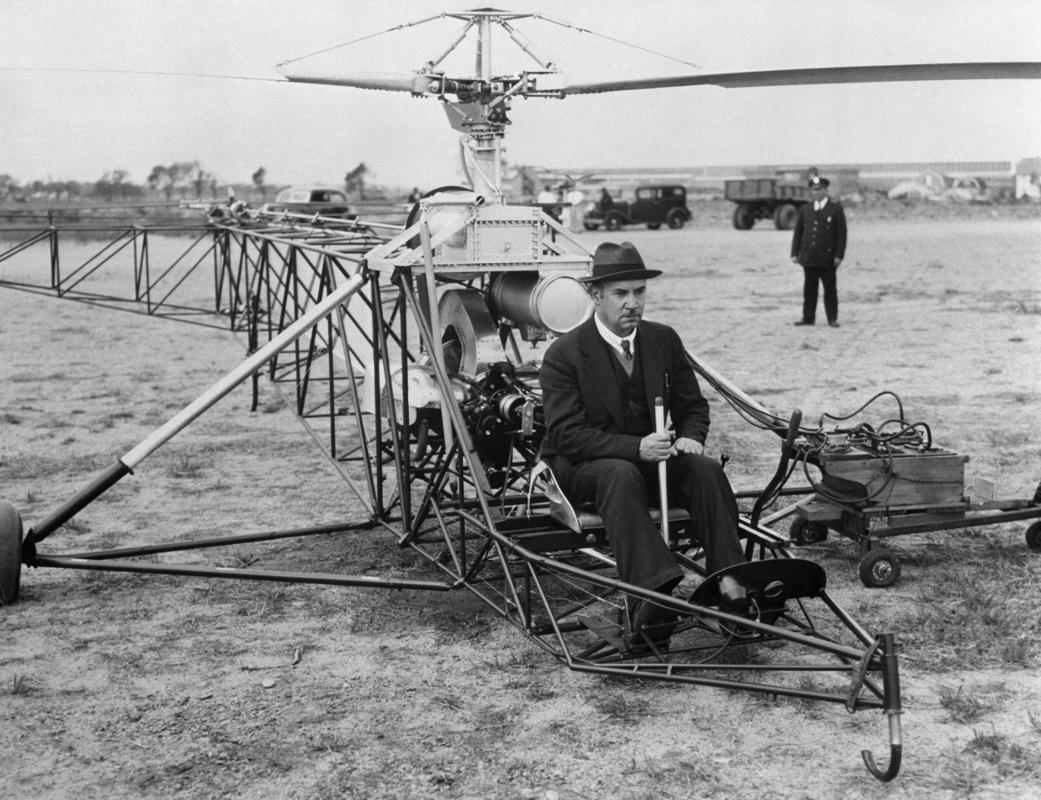
But do you know the helicopter had its first flight ever right here in Connecticut. It was the creation of Russian immigrant and inventor Igor Sikorsky, 80 years ago.
Sure, Leonardo da Vinci made early drawings of a vertical flying machine, but that was in the 1480s. And kids had been playing with hand-turned, propeller-driven toys for centuries before that.
Sikorsky drew his earliest concept drawings of a helicopter years before the Wright brothers ever flew at Kitty Hawk. But when he fled Russia with his family, it was a fixed-wing aircraft that gave Sikorsky his start in aviation.
Image result for igor sikorsky

At the age of 21, he designed his first airplane, the S-1, a single-engine pusher biplane. Twenty-three designs later, he built the S-42 flying boat, made famous by Pan American as “The Flying Clipper.” The four-engined craft had a range of 1,200 miles carrying 37 passengers by day or 14 by night in berths, cruising at 170 mph.
Even as Pan Am was opening overseas markets, Sikorsky was still working on his dreams of a helicopter. At his plant in Stratford, his VS-300 made its first flight, albeit tied to the ground, in September of 1939.
A 1942 version, the Sikorsky R-4, became the first mass-produced helicopter, quickly adopted by the armed forces of the U.S. and UK. It had only one crew member, could only carry 500 pounds, but had a range of 130 miles flying 65 mph at up to 8,000 feet.
Flash forward to the present and Sikorsky’s old company, now part of Lockheed Martin, still produces helicopters. Sikorsky’s successor companies, then part of United Aircraft Corp, even designed the short-lived (1968 -1976) Turbotrain, powered by a Pratt & Whitney turbine “jet engine.” The train could make the 230-mile New York-to-Boston run in 3 hours, 39 minutes. Today’s Acela can do the same run in no less than 3 hours, 55 minutes.
In a competition with the electric-powered Metroliner in 1967, the Turbotrain hit 170 mph, a land speed record for a gas turbine-powered rail vehicle. Acela does no better than 145 mph. Click to keep reading in The Middletown Press

Wednesday, September 25, 2019

How a senior citizen almost lost $300K in a Social Security scam

How a senior citizen almost lost $300K in a Social Security scam
From NJ.com
Senior citizens who depend on Social Security income are the target of a growing phone scam aimed at bilking retirees out of their life savings.
A Cumberland County senior is one of the latest victims.
She didn’t want to share her name but she wanted to warn others about the scam. We’re going to call her Grace.
Here’s what happened.
Grace received a robocall message that claimed there was an investigation into her Social Security number. She ignored the message.


The scammer called and left a second message, and Grace was concerned enough to call him back.
A man who identified himself as a Social Security Administration officer answered the call in heavily accented English.
He told Grace there was a lot of criminal activity in Texas related to her Social Security number, specifically drug trafficking and money laundering. He transferred her to a supervising officer.
This person told Grace she needed to move quickly. Law enforcement was close to seizing her financial accounts, he said, and her Social Security number was being suspended.
“This alleged officer stated he wanted to help her and she needed to take all of her money out of her bank accounts and send the cash to him,” said James Matlock, director of the Cumberland County Division of Consumer Affairs. “Once he received the cash, he would secure it in a safe place and return it to her, in full, once the Social Security number suspension was lifted.”
The officer told Grace not to tell anyone about the money transfer - not even her husband - because they could both get in trouble, Matlock said.
Grace was scared. She was afraid that she could lose all of her savings.
She followed the officer’s instructions.
She withdrew $45,000 in cash from her banks. Per the instructions, she wrapped $20,000 in bubble wrap and placed it in a FedEx box, shipping it to a New York address. She did the same with the rest of the money, sending it to a different address in New York.
Next, the officer instructed Grace to clean out her IRA accounts. He would safeguard that money, too.
Grace contacted her IRA custodian and initiated the withdrawal, and the custodian withheld $45,000 for taxes.
It would take a week for her to receive the remaining $180,000 balance.
While she waited, the officer directed Grace to purchase $7,000 worth of gift cards from Target, Walmart, Best Buy and GameStop.
A LIGHT BULB
When the $180,000 arrived, again, per the officer’s instructions, she gathered the cash and the gift cards. She was going to mail it all to the scammer.
But on the way to send the packages, she paused.
She remembered meeting Matlock at a senior fraud presentation in 2018. She decided to call him to ask if she was doing the right thing.
“I immediately advised her it was a scam and stopped her from sending the additional cash and gift cards,” Matlock said.
He directed Grace to contact the local police and to put a freeze on her credit reports. Matlock also contacted the New Jersey State Police’s cybercrime unit.
While Grace didn’t lose the rest of her money, she’s still out the first $45,000. Because she mailed cash, it’s unlikely that her money will ever be recovered.
She’s also going to owe a tax bill on part of the IRA withdrawal.
Matlock is working with the companies from which Grace purchased the gift cards so at least she can get that money back.
PROTECT YOUR LOVED ONES
Matlock wants to remind us all that the government will never suspend your Social Security number. No representative from a government agency will threaten you or try to solicit money over the phone.
“Never, never give your Social Security number or personal information over the phone, no matter who the caller claims to be,” he said.
The scammers are tricky, and they’re able to make it look on your caller ID that a call is really coming from a government agency or from your local neighborhood.
If you do not recognize the number, do not answer it, Matlock said. If it’s important, the caller will leave a message.
Of course, the scammers did leave messages for Grace, and she did call them back. If you receive a message and you’re not sure if the call is legit, don’t call the number. Instead, look for the real number for the agency that’s allegedly calling you and you can confirm whether there’s a problem with your account.

Tuesday, September 3, 2019

Meet the man who invented America’s first ATM 50 years ago

Three times per month, Donald Wetzel heads to a drive-up automated teller machine near his Dallas home.
“It’s convenient and fast, and I’ve got my money and I’m gone,” the 90-year-old tells The Post.
But he keeps his own accomplishments humble during these trips. Wetzel invented America’s very first ATM, which debuted 50 years ago on Sept. 2, 1969, at the former Chemical Bank (now a Chase location) in Rockville Center, Long Island.
“I’m proud that it all worked out well and I feel good I had the idea, but a lot of people have had a lot of ideas,” he says. He’s even quick to add that his wife, 87-year-old Eleanor, has never once used an ATM.
“She’s afraid that the machine will take her card and not give it back to her,” he quips.
Many don’t know the nation’s first ATM took its maiden voyage on Long Island.

“I was surprised and I’m a Long Islander,” says Harry Coghlan, 54, CEO and executive director of the Nassau County Industrial Development Agency. “I was also very surprised that it was 50 years ago … [it’s] an innovative technology that changed the banking industry — and it changed how we consumers act.”
Enlarge Image


Despite the technological advancement, the 1969 premiere of the outdoor machine was kept low-key — and Wetzel was present for it.
“They advertised it and said, ‘On September 2, our bank will open at 9 o’clock and never close again,’” he says.
But at 10 a.m. Sept. 6, Nassau County will honor Wetzel with a ceremony for the anniversary at the bank, located at 10 North Village Ave.
However, the ATM that appeared that day in Rockville Centre wasn’t the first in the world. According to Smithsonian Magazine, cash dispensers rolled out in Sweden and Britain in 1967. In 1969, when this Long Island one opened, another debuted in Tokyo.
Still, the birth of the American ATM owes its origins to Wetzel being stuck on a Dallas bank line before departing on a business trip in 1968.
“It happened to be right at noon on payday for a lot of workers,” he says. “The line was long and it was taking forever to get money of an account that I knew was there. All they had to do was give it to me. I didn’t want to wait a half an hour for them to give it to me.”
So over the next year, Wetzel — working for a financial transaction systems manufacturer named Docutel — teamed with a mechanical engineer, Tom Barnes, and an electrical engineer, George Chastain, to develop the machine. They never intended to render bank tellers obsolete; it was a way for banks to keep visits efficient.
Enlarge Image
The development came in two phases. The ATM that premiered in 1969, smaller than the ones used today, just dispensed cash and printed a receipt. In the second phase, a “total machine” that was unrolled in 1971 released cash, received deposits and transferred funds between accounts. Both relied on bank cards with magnetic strips, which stored account information.

“For me, that’s one of the proudest things I feel about the ATM — that we really did our homework,” Wetzel says. “We knew what functions the machine had to perform.”
The reason it rolled out on Long Island? Docutel was a subsidiary of a company named Recognition Equipment, Inc., which had an established relationship with Chemical Bank after previously doing business together. Click here to continue reading. 

Thursday, August 29, 2019

Medicare Check-up

With the year more than halfway over, now’s a great time for a Medicare check up and see if you’re up to date on your preventive care appointments.
 
 Medicare offers many preventive tests and screenings, most at no cost to you. These services can help you stay healthy, find health problems early, and prevent certain diseases and illnesses. For example, Medicare covers screenings for diabetes, osteoporosis, heart disease, colon and breast cancers, and more.

If you have Original Medicare (Part A and/or Part B), sign in to your MyMedicare.gov account to see a personalized calendar of your current and upcoming preventive services. Don’t have an account yet? It’s free – and easy – to sign up. Visit MyMedicare.gov to get started.
 
If you’re in a Medicare Advantage (MA) plan, contact your plan for a list of covered preventive services. MA plans must cover all the same preventive services as Original Medicare. Some MA plans may offer additional services.
Here’s to your health!